

Headaches: when powering through stops working
You know the drill by now. The tightness starts at the base of your skull or behind one eye, you take something, you push through the afternoon, and you tell yourself everybody gets headaches. Maybe. But not every week, and not so often that you plan around them.
Here's the part that surprises people: a big share of chronic headaches don't start in the head. They start in the neck. The top two bones of your spine sit right under your skull, wrapped in nerves and muscle, and when they stop moving the way they should, the tension refers up and over. Hours looking down at a phone does it. Old whiplash you forgot about does it. So does plain stress, because your shoulders have been sitting an inch higher than they should since March.
How we approach it at Radius
I don't chase the headache. I look for the reason your nervous system keeps producing it. Your first visit is a conversation, nervous system scans, and X-rays if you need them, and I pay close attention to the upper neck.
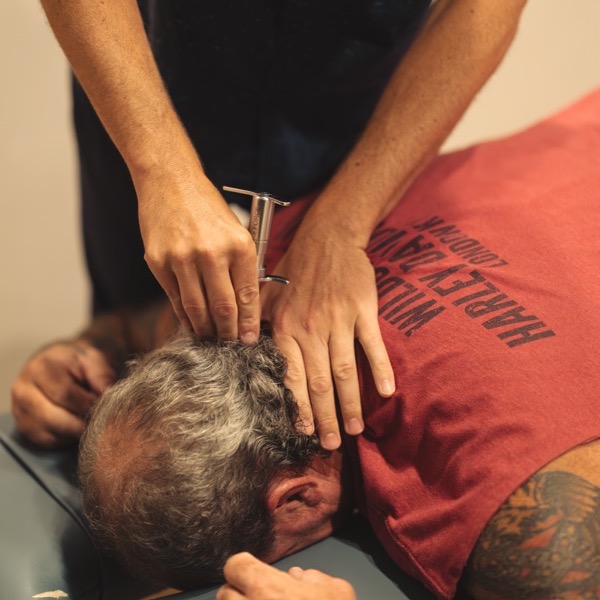
From there, care is usually gentle, specific adjusting with the Torque Release Technique. No neck twisting or cracking, which matters to people who feel a migraine coming when anyone touches their neck. We're restoring normal movement to the joints feeding the problem and letting the nervous system settle out of the pattern it's stuck in.
Some patients notice fewer headaches inside a few weeks. Others, especially long-time migraine sufferers, improve slower and in stages: less often first, then less intense. I'll tell you honestly what I expect for you after I see your scans.
When to get checked
A headache that's sudden and the worst of your life, or one that comes with fever, a stiff neck, confusion, or numbness, is an emergency room visit. Please take that seriously.
For everything else, the rule of thumb: if headaches are frequent enough that you carry medicine "just in case," it's worth finding out whether your neck is driving them. Book online or call (828) 333-4447.
Can chiropractic help migraines?
Often, though I won't promise it until I've seen what's going on in your neck and nervous system. Migraines with a neck component tend to respond well. Migraines driven by other triggers need other help, and if that's you, I'll say so.
Do you crack necks?
No. Torque Release is an instrument-based technique, light and specific. Most people are surprised how gentle the adjustment is, especially if they came in braced for the twist-and-pop thing.
How long until I notice a difference?
Usually a few weeks if your neck is the driver. Frequency drops first, intensity second. If nothing has budged after a fair trial of care, I'll tell you and help you figure out the next step.
More ways we can help.
Chiropractic Care
Precise, gentle adjustments guided by Torque Release analysis.
Pediatric Care
Gentle care for growing nervous systems.
Prenatal Care
Webster-certified care through pregnancy and delivery.
PEMF & HEIT
Deep magnetic stimulation that reaches what hands cannot.
Spinal Decompression
Gentle space for discs and nerves to heal.
Personal Injury Care
Care that helps your body stand down after an accident.

Escape The Matrix