Generate
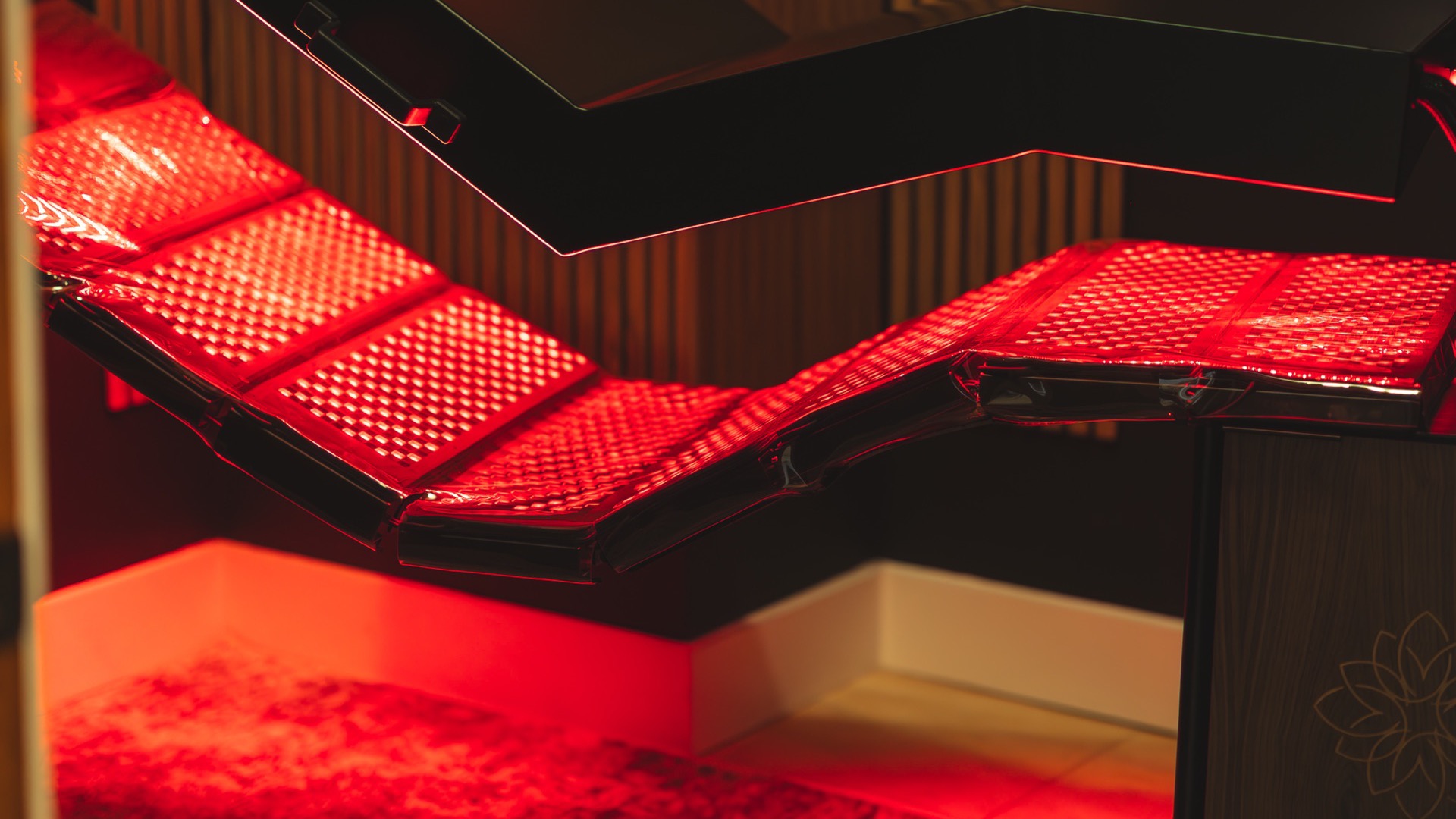
15 minutes on one red-light bed. Five modes: body contouring, recovery, pain, skin, and circulation. Add the Radius Super Stack and you get more out of every session.
01 / Protocols
The Protocols.
The Dahlia Pinnacle Bed has five modes. Each one tunes its wavelengths for a different goal, so you pick the one that matches what you came in for.
-
01
Body Contouring
Slims and shapes by targeting stored fat, using all four wavelengths.
Protocol detail
Focus. Slimming and shaping the waist, hips, and thighs, with metabolic support.
Body Contouring runs on Dahlia's Weight Loss PTx™ program: all four wavelengths together, with the bed's sensors adjusting the mix as you go. The near- and far-infrared wavelengths reach deep to help your cells make more energy, and the red wavelengths support circulation closer to the surface.
- Metabolic supportHealthy mitochondria burn fuel more efficiently, which supports the work you're doing with movement and food.
- More cellular energyATP production rises, and ATP is the energy your body runs on.
- Fat releaseIn published studies, 635nm red light prompted fat cells to open tiny temporary pores and release the fat they were storing, putting it back into circulation where your body can burn it.
- Reduced inflammationLowers swelling associated with weight gain and metabolic stress.
630nm · Full 660nm · Full 850nm · Full 940nm · FullTuned combination of all four wavelengths, balanced by sensor-driven algorithms.
Reaches muscle · near-infrared · ~30mm
Sourced from Dahlia Health Weight Loss PTx™ product literature (dahliahealth.com). Wavelength bands and tissue depths are illustrative.
-
02
Recovery
Stronger near- and full-infrared for deeper post-activity recovery.
Protocol detail
Focus. Post-activity recovery and tissue support.
Recovery PTx™ uses all four wavelengths but leans harder on the deeper 850nm and 940nm infrared. The sensors adjust as you go. Deeper in the tissue, that helps your cells make energy, clear out lactate, and calm the stress that builds up after you train.
- Muscle growthStimulates strength gains, endurance, and hypertrophy.
- Faster recoveryReduces inflammation, soreness, and downtime between sessions.
- Reduced sorenessDiminishes DOMS so workouts can stay on schedule.
- Injury preventionMaintains tissue integrity to minimize strain risk.
630nm · Full 660nm · Full 850nm · Boosted 940nm · BoostedBalanced across all four wavelengths · stronger 850 + 940nm · sensors adjust dynamically.
Reaches muscle · near-infrared · ~30mm
Sourced from Dahlia Health Recovery PTx™ product literature (dahliahealth.com). Wavelength bands and tissue depths are illustrative.
-
03
Pain
Turns up the deeper-reaching 850nm and 940nm infrared.
Protocol detail
Focus. Discomfort and comfort routines.
Pain PTx™ turns up the deeper 850nm and 940nm infrared and pulls back the surface red (630/660nm). That infrared reaches into joints and deep muscle, where it calms inflammation and helps your body release its own endorphins.
- Pain reductionTriggers natural endorphin release and dampens nociceptive signals.
- Faster healingPromotes cellular repair and regeneration in damaged tissue.
- Reduced swellingCalms the inflammation that underlies most chronic pain.
- Drug-freeNon-invasive alternative with no downtime or side effects.
630nm · Reduced 660nm · Reduced 850nm · Boosted 940nm · BoostedHigher intensity 850 + 940nm · 630 + 660nm reduced.
Reaches deep muscle · far-infrared · ~40mm
Sourced from Dahlia Health Pain PTx™ product literature (dahliahealth.com). Wavelength bands and tissue depths are illustrative.
-
04
Skin
Visible red light first: 630nm for the body, 660nm for the face.
Protocol detail
Focus. Skin appearance, collagen, and surface rejuvenation.
Skin PTx™ leads with the visible red wavelengths, 630nm for the body and 660nm for the face, and pulls back the deeper 850/940nm. Red light sinks into the dermis and wakes up the cells that build collagen and elastin.
- Collagen productionFibroblasts upregulate, restoring firmness and elasticity.
- Tone and textureImproves cellular turnover for a more even complexion.
- Scar reductionInhibits TGF-beta I expression to soften scar tissue.
- Fewer fine linesReduces visible wrinkles and signs of photo-aging.
630nm · Boosted 660nm · Boosted 850nm · Reduced 940nm · ReducedPrioritizes visible red · 630nm (body), 660nm (face) · 850 + 940nm reduced.
Reaches dermis · red light · ~5mm
Sourced from Dahlia Health Skin PTx™ product literature (dahliahealth.com). Wavelength bands and tissue depths are illustrative.
-
05
Circulation
Full-spectrum delivery across all four wavelengths.
Protocol detail
Focus. General circulatory and wellness support.
Circulation PTx™ runs all four wavelengths (630, 660, 850, 940nm) at full strength, with the sensors adjusting as you go. Red and infrared together prompt your blood vessels to release nitric oxide, which opens them up and moves more oxygen through your body.
- Enhanced blood flowVasodilation lifts oxygen delivery to every system.
- Vascular functionLowers risk profile for endothelial dysfunction.
- Reduced swellingClears the inflammation tied to poor circulation.
- Accelerated healingDelivers nutrients and oxygen to damaged tissue faster.
630nm · Full 660nm · Full 850nm · Full 940nm · FullFull-spectrum delivery · 630, 660, 850, 940nm · sensor-driven adjustments.
Reaches muscle · near-infrared · ~30mm
Sourced from Dahlia Health Circulation PTx™ product literature (dahliahealth.com). Wavelength bands and tissue depths are illustrative.
02 / The Super Stack
Fuel your mitochondria.
Red light switches your cellular engines on. The Super Stack gives them the fuel to run. Dr. Dan Martin curated and designed it to get more out of every session.
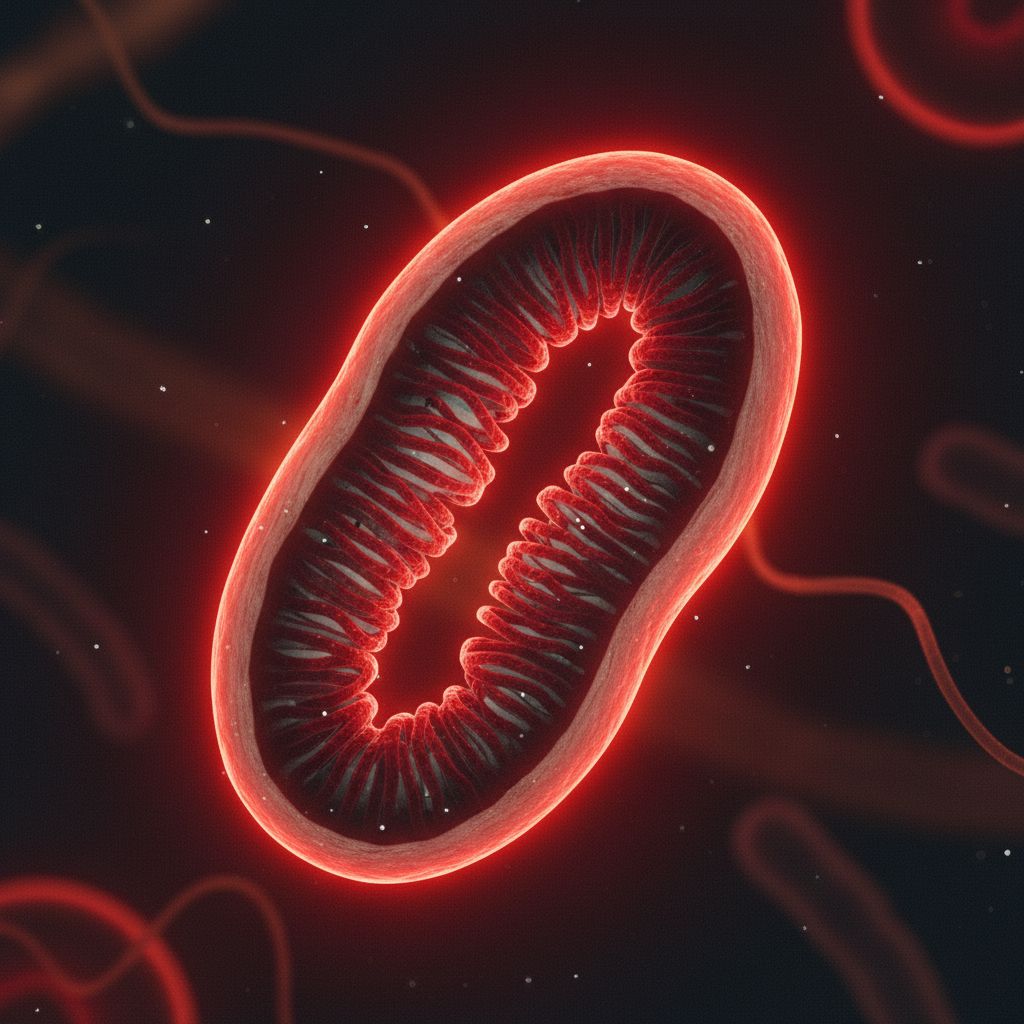
How it works. Food, oxygen, and red light fuel your mitochondria. Your mitochondria turn that into ATP, the energy your body uses for everything above, from powering your muscles to bouncing back after a hard day.
-
01
Metabolism
When your mitochondria are healthy, they burn fuel more efficiently. That engine is behind everything from steady energy to recovery.
-
02
Pain relief
The ATP your mitochondria make powers tissue repair and calms inflammation where it starts, so you feel less soreness and easier joints.
-
03
Faster recovery
Mitochondria clear oxidative stress and rebuild between sessions instead of fighting to catch up.
-
04
Circulation
Healthy mitochondria help your vessels release nitric oxide, which opens them up so oxygen and nutrients reach every cell.
-
05
Skin & aging
How well your mitochondria work is one of the clearest signs of how you're aging. Keep them healthy and you protect your collagen and tone from the inside out.
03 / Research
International research on light therapy.
More than 200 peer-reviewed studies across 14 areas of health. Researchers have looked at red and near-infrared light for pain, recovery, skin, fat loss, wound healing, and brain function, among others.
Peer-reviewed studies
Therapeutic domains
Years of research
See the research
Pain Relief & Inflammation PBM · 632–904 nm 22 studies
Red and near-infrared light modulates inflammatory mediators, relieves pain of varied etiologies, and improves function in chronic conditions.
- Efficacy of phototherapy in the management of neck pain — systematic review + meta-analysis (Lancet, 2009)Chow RT, Lopes-Martins R, Johnson M, Bjordal JM
- Phototherapy reduces pain immediately and up to 22 weeks after treatment in chronic neck painRandomized controlled trials review
- Long-term effect of high-intensity laser therapy in chronic low back pain (RCT, 2013)Alayat MS et al., Lasers Med Sci
- Photobiomodulation (PBM) — use of red and near-infrared light to stimulate healing, relieve pain, and reduce inflammationHamblin MR, review
- Effects on inflammatory mediators, neutrophils, and macrophages in acute joint inflammation (808 nm)Alves AC et al., 2013
- Combined with exercise — more beneficial than exercise alone in chronic low back pain long-termDjavid GE et al.
- Low-level laser effects on pain to palpation and EMG activity in TMD patients (780 nm)Venezian GC et al., 2010
- Beneficial for the reduction of postoperative painMoore K et al.
Muscle Performance & Recovery RLT · 655–905 nm 15 studies
Pre- and post-exercise phototherapy improves performance, reduces muscle fatigue, and accelerates recovery at red and near-infrared wavelengths.
- Effect of phototherapy (LLLT + LED) on exercise performance and recovery — systematic review + meta-analysisLeal-Junior EC et al., 2013
- Photobiomodulation improves performance and accelerates recovery in high-level rugby players (RCT)905, 875, 640 nm — Ferraresi C et al., 2016
- Effect of 830 nm LLLT applied before high-intensity exercise on skeletal muscle recovery in athletesLeal-Junior EC et al., 2009
- Red (660 nm) vs. infrared (830 nm) LLLT in skeletal muscle fatigue in humansde Almeida P et al., 2012
- Effects of 808 nm LLLT on physical strength training in humansFerraresi C et al., 2011
- Pre-exercise photobiomodulation improves cardiopulmonary exercise test performanceMiranda EF et al., 2016
- Effects of infrared-LED during high-intensity treadmill training in postmenopausal womenPaolillo FR et al., 2011
Skin Rejuvenation & Anti-Aging PTx · 633–830 nm 12 studies
Increased intradermal collagen density, reduced fine lines and wrinkles, improved complexion and skin feeling in controlled trials.
- Controlled trial — red + near-infrared treatment for fine lines, wrinkles, skin roughness, and collagen densityWunsch A, Matuschka K, 2014
- LED phototherapy for skin rejuvenation — RCT with clinical, profilometric, histologic, ultrastructural evaluationsLee SY et al., 2007 (830 + 633 nm)
- Combination LED light therapy (633 + 830 nm) in facial skin rejuvenationRussell BA et al., 2005
- Omnilux Revive facial treatment in skin rejuvenation — single-blinded RCTBhat J et al., 2005
- LED phototherapy and wound healing / skin rejuvenation — role of the mast cellCalderhead RG et al., 2008 (830 nm)
Fat Loss & Body Contouring LLLT · 532–680 nm 8 studies
Independent evaluations of low-level laser therapy at 635 nm show non-invasive reduction of waist, hip, and thigh circumference.
- Independent evaluation of LLLT at 635 nm for non-invasive body contouring of the waist, hips, and thighsJackson RF et al.
- Efficacy of low-level laser therapy for body contouring and spot fat reduction (635–680 nm)Caruso-Davis MK et al.
- Fat liquefaction — effect of low-level laser energy on adipose tissue (635 nm)Neira R et al.
- LLLT does not reduce adipose tissue by local injury but by modulation of systemic lipid metabolism (650 nm)Aquino AE et al., 2016
- Body contouring using light therapyReview
- Light therapy for fat layer reductionReview
Wound Healing & Tissue Repair LLLT · 470–904 nm 14 studies
Low-level light therapy accelerates healing, induces angiogenesis, and improves outcomes in post-operative, chronic, and ischemic wounds.
- NASA research — phototherapy greatly enhances natural wound healing and return to pre-injury activityWhelan HT et al.
- LLLT as an effective therapeutic modality for delayed wound healingHawkins D, Houreld N, Abrahamse H, 2005
- LLLT facilitates superficial wound healing — triple-blind, sham-controlled studyHopkins JT et al., 2004
- Low-level light therapy by LED of different wavelengths induces angiogenesis in ischemic wound healing470 + 629 nm
- Cell viability, NF-κB activation, NO release, mitochondrial respiration, and wound healing in endothelial cellsPubMed 30145725
- 830 nm irradiation increases wound tensile strength in a diabetic murine modelStadler I et al., 2001
Brain & Cognition tPBM · 633–810 nm 10 studies
Transcranial photobiomodulation shows promise for cognitive improvement in TBI, dementia, Parkinson’s, and other neurological conditions.
- Transcranial red/near-infrared LED therapy to improve cognition in chronic TBI (633 nm)Naeser MA et al., 2016
- Significant cognition improvement in mild-to-moderate dementia — transcranial + intranasal PBM (810 nm)Saltmarche AE et al., 2017
- PBM-induced changes in a monkey model of Parkinson’s disease — tyrosine hydroxylase cells & GDNF expressionEl Massri N et al., 2017
- Shining light on the head: photobiomodulation for brain disordersHamblin MR, 2016
- 670 nm red light-enhanced BMSC transplantation for hypoxic-ischemic brain damage treatment660 nm, 7 consecutive days
Sleep & Endurance RLT · 658 nm 1 study
Red-light exposure linked to improvements in sleep quality and endurance performance in controlled athletic populations.
Hair Regrowth PBM · 650–656 nm 3 studies
Photobiomodulation with red light at 650–656 nm promotes visible hair growth in men and women with androgenetic alopecia.
- Novel approach to treating androgenetic alopecia in females with PBM (LLLT) — 650 nm, 60 treatmentsPinar Avci et al., 2017
- Growth of human scalp hair in males — 655 nm laser + LED, 60 treatmentsLanzafame RJ et al., 2013
- Growth of human scalp hair in females — 656 nm, 60 treatmentsLanzafame RJ et al., 2014
Nerve Regeneration & Neuropathy NIR · 660–904 nm 9 studies
Near-infrared light improves nerve deficits, regenerates peripheral nerves, and addresses chemotherapy-induced neuropathy.
- Effect of near-infrared LED on nerve regeneration (660 nm, 3 weeks)Ishiguro M et al., 2010
- Phototherapy results in subjective and objective improvement in nerve deficitBasford JR
- The effect of PBM on chemotherapy-induced peripheral neuropathy — RCTSham-controlled clinical trial
- Mechanistic basis for PBM therapy of neuropathic pain by NIR laser light (808 nm)Holanda VM et al., 2017
- PBM triple treatment in peripheral nerve injury — nerve and muscle response2017
Vision & Retinal Health PBM · 590–790 nm 7 studies
Red and near-infrared wavelengths protect photoreceptors, reduce age-related macular inflammation, and improve visual acuity.
- LLLT improves vision in patients with age-related macular degeneration (780 nm)Ivandic BT, Ivandic T, 2008
- Photobiomodulation reduces drusen volume and improves visual acuity in dry AMD590 / 670 / 790 nm
- 670 nm light upregulates cytochrome c oxidase and reduces inflammation in AMD modelBegum R et al., 2013
- 670 nm light protects cone photoreceptors from white-light-induced degenerationAlbarracin R, Valter K, 2012
- Near-infrared PBM in retinal injury and disease — review2015
Thyroid LLLT · 830 nm 3 studies
LLLT at 830 nm improves outcomes in chronic autoimmune thyroiditis and reduces thyroid medication requirements in controlled trials.
- LLLT in the treatment of hypothyroidism induced by chronic autoimmune thyroiditis — RCTHöfling DB et al., 2013 (830 nm)
- LLLT in chronic autoimmune thyroiditis — pilot study (830 nm, 10 applications)Höfling DB et al., 2010
- Effects of LLLT on TGF-β1 concentrations in autoimmune thyroiditis (830 nm)2014
Acne, Psoriasis, Scars & Other Indications Multi · 308–830 nm 18 studies
Blue + red combinations for acne vulgaris, 308 nm excimer for psoriasis, prophylactic treatment for hypertrophic scars and keloids.
- Combination blue (415 nm) + red (633 nm) LED phototherapy for mild-to-severe acne vulgarisGoldberg DJ, Russell BA, 2006
- Phototherapy with blue (415 nm) + red (660 nm) light in acne vulgarisPapageorgiou P et al., 2000
- Combination 830 + 633 nm LED phototherapy for recalcitrant psoriasisAblon G, 2010
- Prophylactic low-level light therapy for hypertrophic scars and keloids (805 nm)Barolet D, Boucher A, 2010
- Phototherapy effective on pain, muscle spasm, morning stiffness in fibromyalgiaGür A et al., 2002
- Phototherapy reduces frequency and severity of Raynaud attacksHirschl M et al.
Research compiled by Dahlia Health LLC. This research library is adapted from the International Research on Light Therapy document maintained by Dahlia Health LLC (07/21). Reproduced for educational purposes. Radius Red Light Therapy operates the Dahlia Pinnacle Bed under license. Rev 07/21 · v1.0
Not medical advice. Studies cited for informational purposes only. Consult a licensed physician.
04 / FAQ
Questions people actually ask
How often should I come?
Most people start with 2 or 3 sessions a week for the first month, then taper to what holds their results. Each session is 15 minutes.
What do I wear?
As little as you're comfortable with. Light only works on skin it can reach, so more skin means more benefit. Sessions are private.
Is it safe?
For most people, yes. There's no UV light, and side effects in the research are rare and mild. If you're pregnant, have epilepsy, or take medication that makes your skin sensitive to light (some antibiotics and acne medications do), talk to us before you book.
Is this like a tanning bed?
No. Tanning beds use UV light, which damages skin. This bed uses red and infrared light, which doesn't tan you and doesn't carry UV risk. They just happen to look like cousins.
How long until I see results?
Depends on the goal. Soreness and recovery, often within a few sessions. Skin changes are slower, usually 8 to 12 weeks of consistent sessions. Anyone promising overnight results is selling something.
What does the research actually support?
The strongest evidence is for skin, inflammation, muscle soreness, and joint and tendon pain, with promising early work on hair regrowth. For anything else, we'll tell you what the studies say, not what a brochure says.
Do I need to be a chiropractic patient?
No. Red light has its own booking, and plenty of people come just for it.
When can I come?
Sessions run during regular office hours, and Friday mornings from 9 to 1 are dedicated red light time. Book online to see open slots.
05 / Book a session
Start your protocol.
Intro session
Intro offer · normally $200
Your first visit includes a consultation and a 15-minute session on the Pinnacle Bed.
- Personalized consultation
- 15-minute session on the Dahlia Pinnacle Bed
- Pick your treatment mode
- Vibration plate therapy
No commitment.
Just try it.
Try one session and see how your body responds. We'll go over your options at your follow up appointment, so there's nothing you need to decide today.
Location
Asheville, NC
Duration
60 min total